13 min read





Think about the last time you pulled a crumpled coffee stamp card from your wallet, only to find it missing two punches you definitely earned weeks ago. You probably gave up and moved on. That small frustration plays out millions of times every single day across restaurants, salons, retail shops, and coffee chains worldwide. Businesses that still rely on paper loyalty cards are not just losing stamps; they are losing customers who simply stop bothering.

A digital loyalty system for customer retention solves this problem at the root, replacing guesswork with data and paper with a smartphone tap. Companies that have switched report up to 25% higher repeat purchase rates, and the gap between digital and paper programs only keeps growing wider every year.
What a Digital Loyalty System Actually Is
Most people assume a digital loyalty system is just a points counter on an app. A digital loyalty system connects every customer interaction i.e,. purchases, visits, and campaign participation to a centralized platform that tracks behavior, spots patterns, and responds to them in real time.
Every time a customer makes a purchase, that action is recorded, counted, and credited to their profile. The business learns what they buy, when they visit, and how often. The customer sees progress toward something they want. Both sides get something real out of the exchange, which is why digital loyalty programs outperform paper cards by a wide margin on every metric that matters.
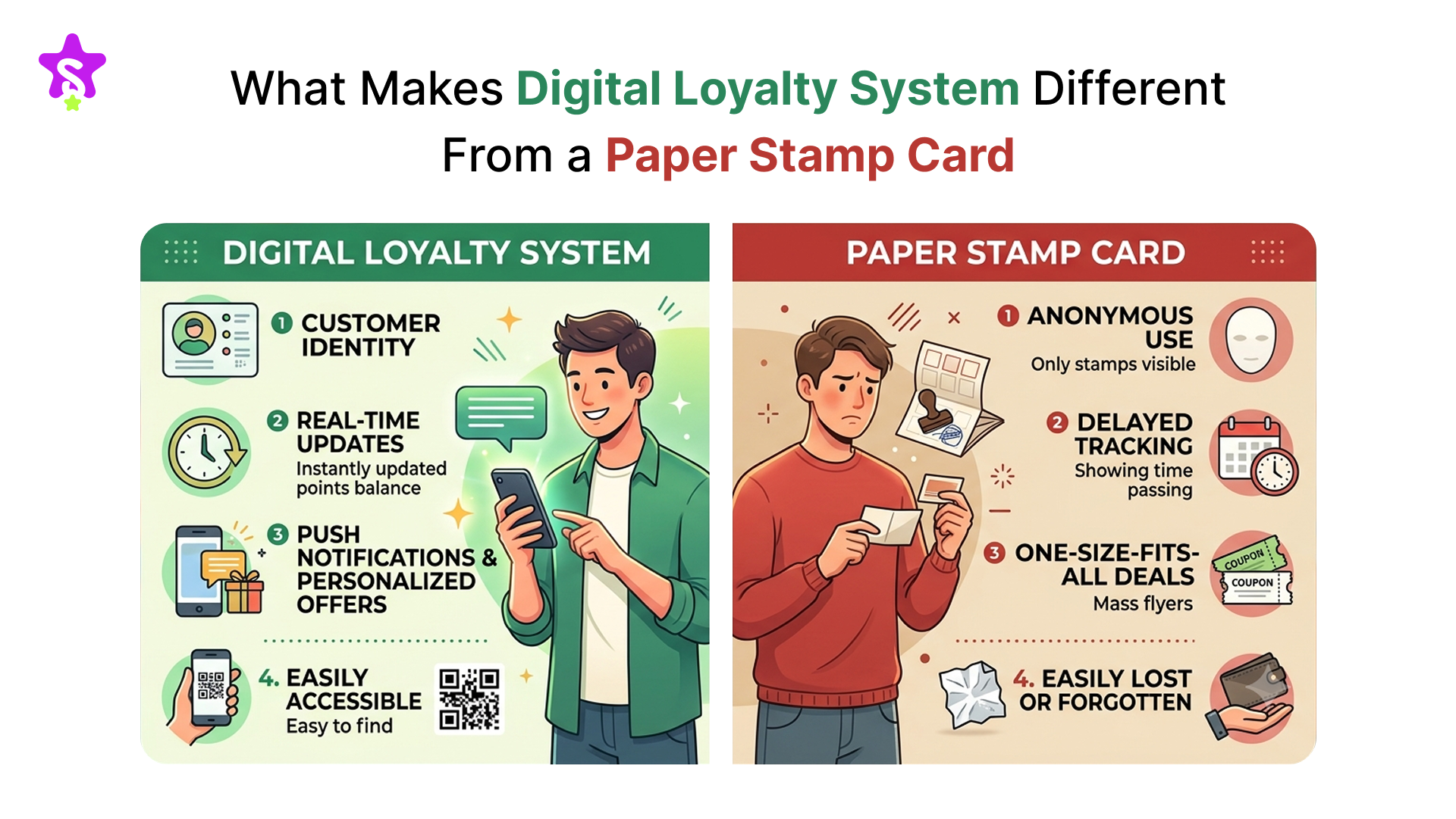
Now the question is what makes it different from a paper stamp card? Paper cards record one thing: that someone visited. They cannot tell you who that person is, what they ordered, or how long it has been since they last came in. A digital loyalty system records all of that without anyone having to do extra work.
- Customer Identity: Every member has a profile with a purchase history, visit frequency, and reward progress tied to their account.
- Real-Time Updates: Points or stamps appear the moment a transaction is completed, with no manual entry and no delays that frustrate customers at the counter.
- Two-Way Communication: Businesses can reach customers between visits through push notifications, personalized offers, and campaign updates; something a paper card can never do.
- Loss-Proof: Paper cards get left at home, thrown in the wash, or lost entirely. A digital profile lives in a phone and follows the customer everywhere they go.
Why Customer Retention Is Worth More Than You Think
Most businesses spend the majority of their marketing budget chasing new customers. New customers feel like growth, so the instinct makes sense, but the numbers tell a quieter story. A recent research found that increasing customer retention by just 5% can raise profits anywhere from 25% to 95%, depending on the industry. Returning customers also spend 67% more per visit on average than first-time buyers.
A customer who has already bought from you has cleared the biggest psychological hurdle: trust. They know your product, your service, and every repeat visit costs you almost nothing in persuasion, but it adds directly to profit.
A digital loyalty system makes retention systematic rather than accidental. Instead of hoping a satisfied customer remembers to come back, the system gives them a concrete reason to return before they have even thought about a competitor.
Key Benefits of a Digital Loyalty System for Customer Retention
1: Increased Customer Lifetime Value
Customer lifetime value (CLV) is the total revenue a business can expect from a single customer over the entire course of their relationship. It sounds like a finance metric that actually tracks whether a business is building relationships that outlast the first sale.
- Longer Engagement: Customers enrolled in loyalty programs stay with a business significantly longer than those who are not, because each reward milestone creates a new reason to return.
- Higher Spend Per Visit: Loyalty members consistently spend more per transaction than non-members. When a customer is six stamps away from a free meal, they are far more likely to add a side dish than walk away early.
- Milestone Triggers: Smart platforms send push notifications when a customer is close to earning a reward, which pulls them back in at exactly the right moment.
A coffee shop that runs a digital loyalty campaign where every fifth drink earns a free one will see customers visit more frequently during the week they are approaching that milestone. This is not theory; it is observable behavior that any business owner with access to campaign data can verify within the first month of running a program.
2: Better Customer Data and Real Business Insights
Paper punch cards collect nothing but digital loyalty systems collect everything that matters. Every scan, every redemption, every campaign interaction adds a data point to a profile that becomes more useful over time.
- Purchase Patterns: The platform logs what customers buy, how often they visit, and at which location, giving businesses a clear view of actual behavior rather than guesswork.
- Campaign Performance: Business owners can see in real time which promotions generate the most participation and which ones are being ignored entirely, so they can adjust quickly.
- Branch Comparisons: Multi-location businesses can compare performance across branches, identify which managers run the most effective campaigns, and replicate what works.
This kind of data used to require expensive market research. Now it comes as a byproduct of running the loyalty program itself.
3: Personalized Offers That Customers Actually Open
The average person receives over 100 marketing emails per day. Most get deleted without being opened. Generic discount blasts go straight to trash before they are ever seen. Personalization changes that outcome completely.
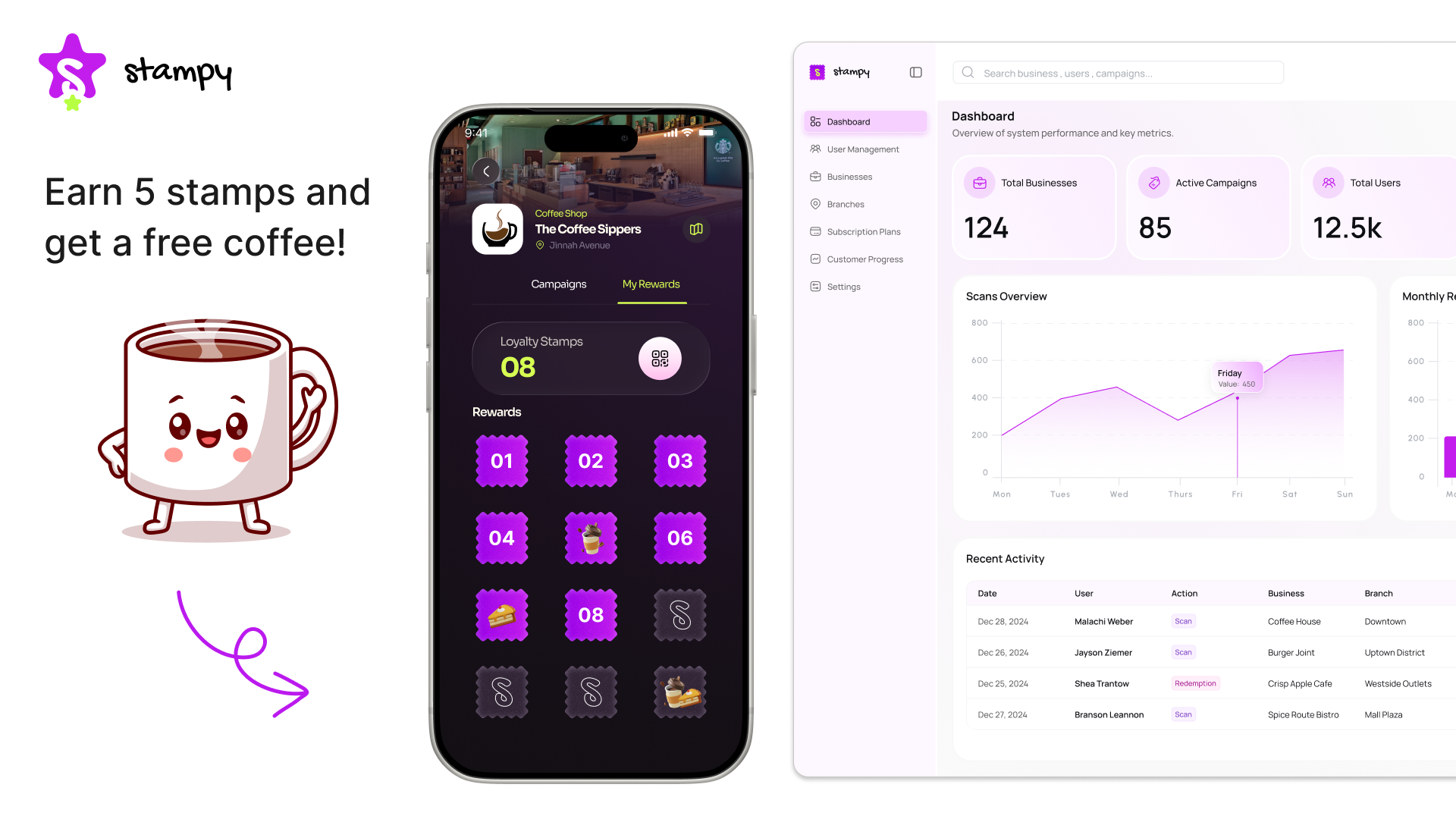
A digital loyalty system knows that a particular customer visits every Friday evening, always orders the same two items, and has not visited in three weeks. That information lets a business send one well-timed message, "We miss you. Here is a free upgrade on your usual order this Friday", rather than a mass promotion that applies to nobody specifically.
4: Reduced Customer Churn
Customer churn is the rate at which customers stop doing business with you. High churn is a slow leak that drains revenue quietly while a business focuses on the noise of acquiring new customers to replace the ones silently walking out.
- Win-Back Campaigns: A digital loyalty platform can identify customers who have not visited in 30, 60, or 90 days and trigger an automatic re-engagement campaign before they are gone for good.
- Progress Visibility: When customers can see they are close to a reward, they are psychologically less likely to abandon their progress. This is the same reason people finish a video game level rather than quit halfway through.
- Habit Formation: Regular engagement through a loyalty app builds a routine. Customers who open the app three times a week develop a habit that makes your business part of their regular life.
5: Stronger Brand Loyalty and Word-of-Mouth
There is a difference between a customer who buys from you because you are convenient and a customer who buys from you. After all, they feel a connection to what you have built. Digital loyalty programs create the conditions for the second kind of relationship.
When a business consistently delivers on its promises, your stamp arrives instantly, your reward is exactly what was advertised, and your free coffee tastes as good as the paid one customers notice. They tell their friends, or they leave reviews that mention the loyalty program by name.
How Digital Loyalty Systems Give Businesses a Real Edge
1: Lower Customer Acquisition Costs
Running a paid advertising campaign to bring in a new customer who may never return is expensive, and the ROI is unpredictable. Running a loyalty campaign that brings back a customer who already loves your product costs a fraction of that and delivers a result you can actually measure.

Businesses that shift even 20% of their acquisition budget into retention-focused digital loyalty campaigns typically see the impact within a single quarter. Treating existing customers as an asset worth investing in is a decision, not a complex strategy.
2: Multi-Location Management Without the Chaos
For businesses with more than one branch, consistency is a constant challenge. Different managers run different promotions. One location participates in a campaign while another does not. Customers get confused, and trust breaks down.
A centralized digital loyalty platform solves this. Business owners set up campaigns from a single dashboard and push them to specific branches or all locations simultaneously. Branch managers can see their own performance data without accessing data from other branches. Salespersons execute at the counter without needing to understand the backend at all. Every role has the access it needs, and nothing bleeds where it should not.
3: A Competitive Advantage That Compounds Over Time
Nobody talks about this enough: a digital loyalty system gets harder to compete with the longer it runs. After two years of data, a business knows its customers better than any competitor possibly can. The offers get sharper. The campaigns hit closer to home. The relationship gets stickier.
A new competitor can copy your menu, match your prices, and open a location across the street. They cannot copy the two years of loyalty data you have built or the 5,000 customers who are already halfway to their next reward with you. That accumulated relationship is a genuine moat, and it grows stronger every single day the system runs.
The Technology Behind a Good Digital Loyalty Platform
1: QR Codes and Mobile-First Design
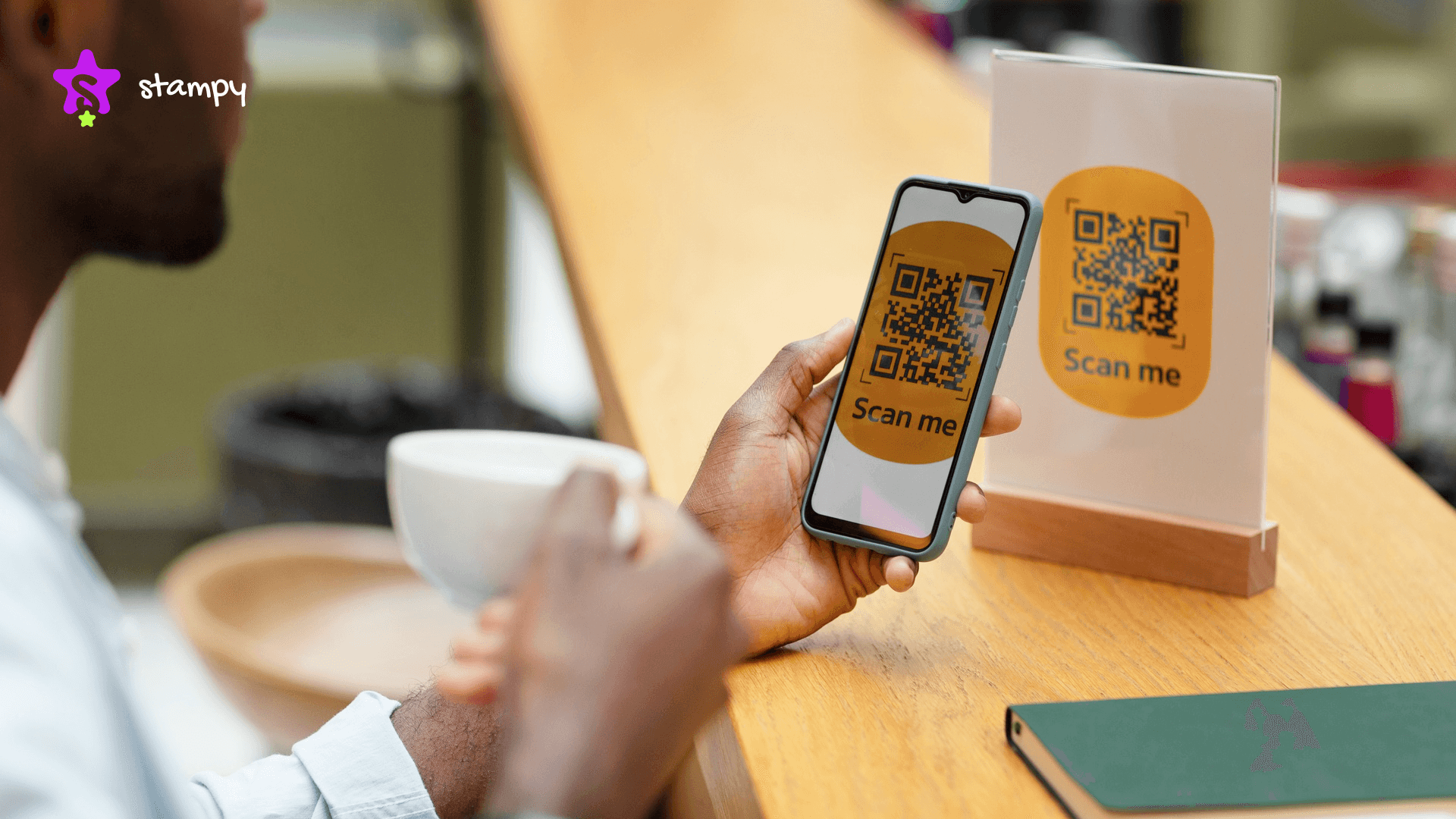
QR code scanning has become second nature to most smartphone users over the last several years. It takes three seconds, requires no app tutorial, and works with any camera. For a loyalty system, this simplicity is critical; any friction at the point of scan means customers skip it, and skipped scans mean missing data.
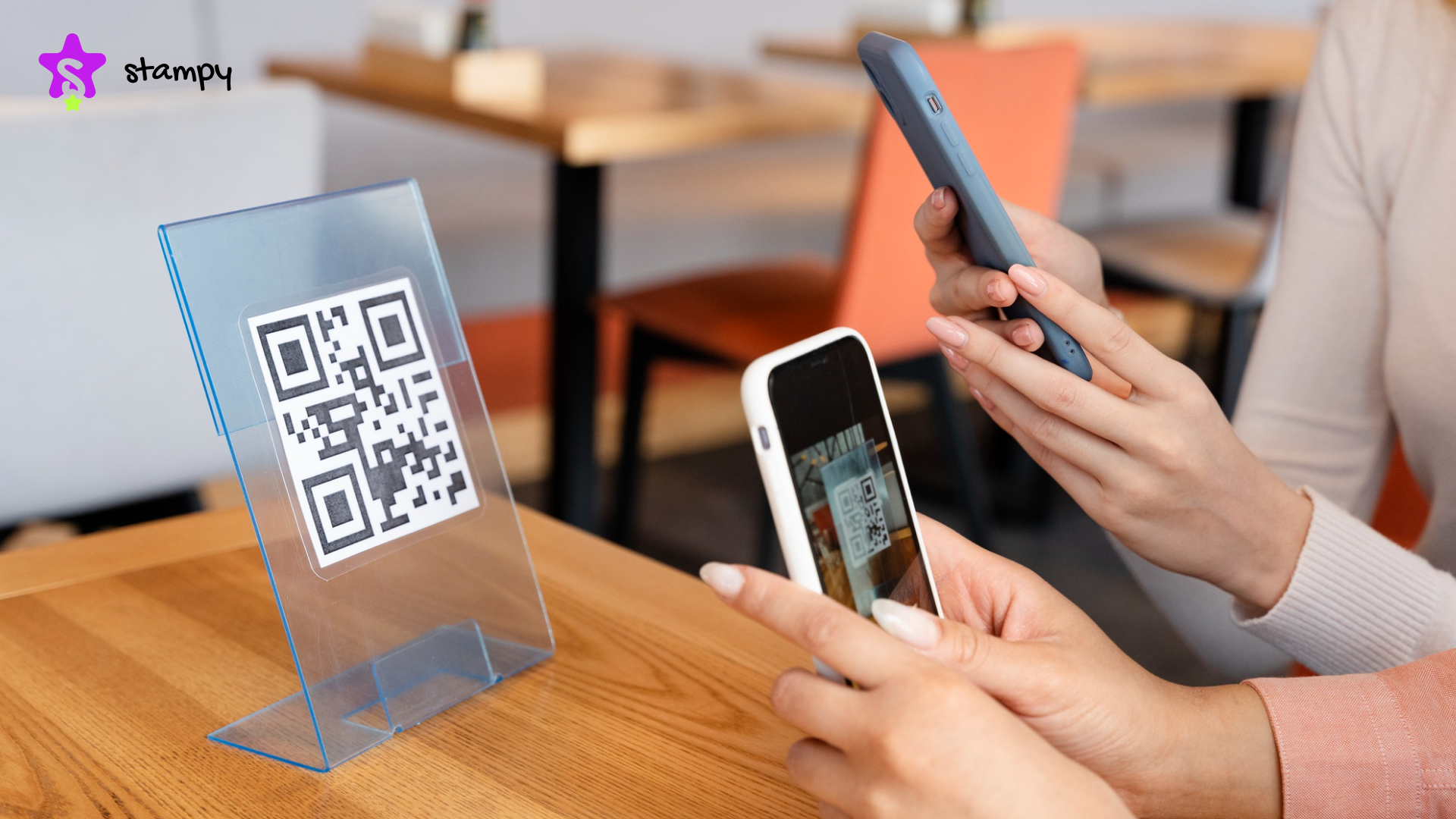
Good platforms assign each customer a unique QR code tied to their account, so the scan is both frictionless and secure. The salesperson scans, the stamp appears, and the interaction is done. No typing, no card presentation, no manual entry unless the scan actually fails.
2: Real-Time Sync and Cloud Infrastructure
- No Lag: A stamp that takes thirty seconds to appear feels broken to a customer standing at the counter waiting for it.
- Always Available: Cloud-hosted platforms stay online even during high-traffic periods, which is exactly when reliability matters most to a business.
- Automatic Backups: Every transaction is stored securely and can be retrieved for reporting, dispute resolution, or performance review at any time.
Common Mistakes Businesses Make with Loyalty Programs
Most failed loyalty programs do not fail because the idea is bad. They fail because of avoidable execution mistakes that happen in the first few months.
- Rewards That Are Too Far Away: If a customer needs to visit 30 times to earn one free item, they will lose motivation before they get anywhere close. Smaller, more frequent rewards outperform big rewards that feel unreachable.
- No Communication After Sign-Up: Signing a customer up and then going quiet is the digital equivalent of handing someone a punch card and never speaking to them again. Regular, relevant communication keeps the program alive between visits.
- Ignoring the Data: Collecting data without acting on it is a waste of the platform's most valuable feature. Businesses that review their campaign performance weekly and adjust accordingly consistently outperform those that set a campaign and forget it.
- Making It Hard to Redeem: If a customer has earned a reward but cannot figure out how to claim it, they feel cheated rather than valued. Clear, simple redemption flows are not optional; they are the whole point.
What is Coming Next in Digital Loyalty
1: Gamification That Goes Beyond Points
Some loyalty platforms are already layering game mechanics on top of the basic stamp model, and the results are hard to ignore. Challenges like "visit three times this week for a bonus stamp," leaderboards for most loyal customers of the month, and limited-time badge collections turn a passive rewards program into something customers check on their own. Engagement rates on gamified programs run significantly higher than on traditional point-based systems, and higher engagement means higher retention.
2: Hyper-Personalized Experiences Powered by Behavioral Data
The next generation of digital loyalty programs will move well past birthday coupons. They will use purchase history, location patterns, and visit frequency to surface the right offer at the right moment for each customer. The technology to do this already exists; it is just a question of which platforms build it well and which businesses choose to use it early.
3: In-App Marketplace and Gift Features
Some platforms are already exploring features where customers can purchase stamps directly, send rewards as gifts to friends, and buy deals within the app using local payment methods. For markets like Pakistan, where Easypaisa and JazzCash are widely used, this kind of in-app transaction capability makes the loyalty platform a commerce destination in its own right, not just a rewards tracker.
Conclusion
Building a business that keeps its customers is harder than building one that attracts them. Attraction is one moment. Retention is every moment after that. A digital loyalty system for customer retention gives businesses the tools to make those moments add up with real data, offers that fit, and rewards customers actually want to earn.
The businesses that figure this out early spend less on acquisition, earn more per customer, and build relationships that a competitor's opening-week discount cannot touch. The technology is there. The results are documented. What is left is the decision.
Frequently Asked Questions
What is a digital loyalty system, and how does it work?
A digital loyalty system is a software platform that replaces physical stamp cards or paper coupons with a trackable, app-based reward experience. Customers sign up, receive a unique identifier, usually a QR code, and earn stamps or points every time they make a qualifying purchase. The business scans their code at the counter, the reward is added instantly, and the customer can track their progress and redeem rewards directly through the app.
How does a digital loyalty system improve customer retention?
It makes returning feel worth the customer's time. When a customer knows their purchases are being counted toward something real, a free item, a discount, an exclusive offer, they have a concrete reason to come back rather than try a competitor. Beyond the reward itself, digital loyalty systems send timely reminders, personalized offers, and progress updates that keep the business in front of the customer between visits.
Is a digital loyalty program worth it for small businesses?
Yes, and arguably more so than for large chains. Small businesses rely heavily on repeat customers to stay profitable, and the cost of losing even a handful of regulars is felt immediately. Digital loyalty platforms today are far more affordable and accessible than they were five years ago, with tiered subscription plans that fit businesses with three locations just as well as those with thirty. The return: more frequent visits, higher spend per visit, and word-of-mouth from customers who feel properly valued.
What kinds of businesses benefit most from digital loyalty systems?
Any business where repeat visits drive revenue sees clear results. Coffee shops, restaurants, salons, retail boutiques, gyms, bakeries, and pharmacies are among the most common use cases. The common thread is a customer base that has a reason to visit regularly and would respond positively to being rewarded for doing so. Businesses with multiple branches benefit additionally from the centralized management and cross-location data that a digital platform provides, which paper programs simply cannot offer at any scale.
How is a digital loyalty system different from a paper stamp card?
A paper card can only record visits, and it cannot tell you who the customer is, what they bought, or when they last visited. A digital loyalty system records all of that automatically. It also allows the business to communicate with customers between visits, run targeted campaigns, track redemption rates, and compare performance across locations.